
Why Your Allergies Get Worse in Winter — And It’s Not the Cold

It’s winter in Australia, and everyone is talking about it. From what I’ve heard, ‘allergy relief’ is expected. During winter, pollen counts go down, windows remain shut, and people hardly stay outside. Yet, contrary to this, many homes will witness winter causing more sneezing, runny nose, itchy eyes, and difficulty breathing. As such, if you can identify with these symptoms, likely, your cold is not the issue; one of the most commonly overlooked causes of allergies in the winter is indoor allergens such as dust mites found in carpets, furniture and bedding. Because the weather is cold outside, we spend a lot of time indoors, and because of this, we are continually breathing the same air over and over again, which causes these microscopic particles to build up within the home, where the air you are breathing is filled with these types of allergens.
So it turns out that winter allergies and carpet dust mites are the problem in an increasing number of Australian homes. Identifying the cause will be the initial step in the relief from symptoms and in transforming your home to a healthier environment.
Indoor Air Changes Fast
Winter is wintery, and so things about our home use change. Doors and windows are kept shut longer to keep the heat in. Heat runs more, and airflow is restricted. The word “Dust Bowl” refers to a location where several different types of indoor allergens accumulate; rather than being kept at bay by removing them. Your indoor allergies will remain fairly consistent regardless of what time of year or what temperature it is. On the other hand, your allergies to things outside will usually come and go based on the season.
Some of the most common sources of indoor allergens include:
- Dust mites
- Pet dander
- Mould spores
- Dust buildup
- Fabric fibres
Cold weather is blamed by many, but the real problem is that we’re spending more time indoors.
Dust Mites Love Winter
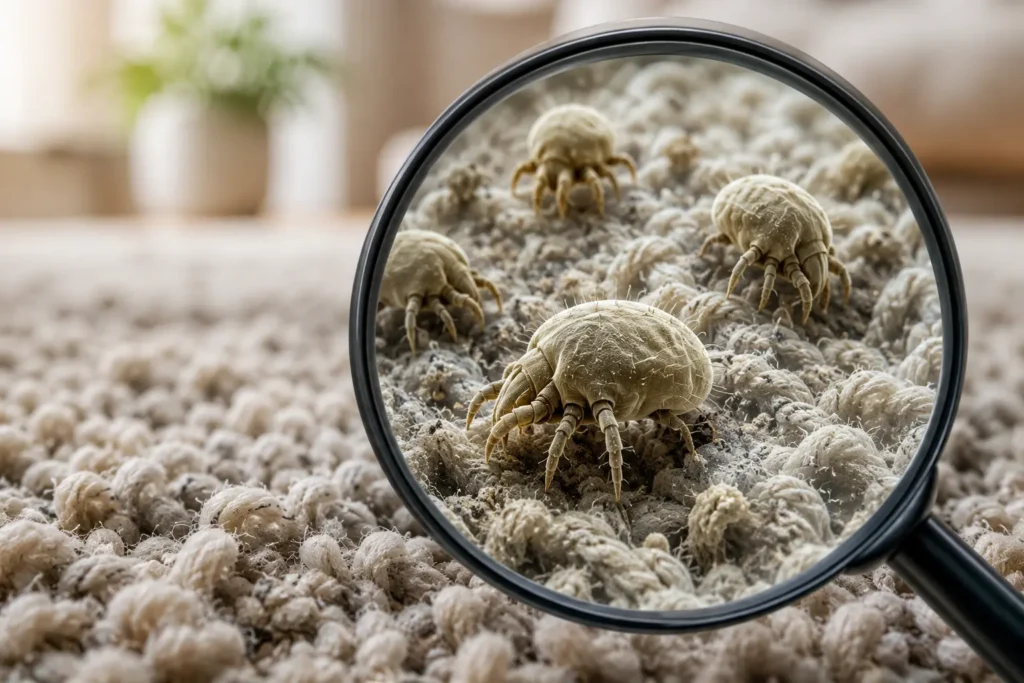
Dust mites also exist inside every home or office you spend time in – they’re much too small to be seen with the naked eye or a standard camera lens. These insects are some of the fastest-growing organisms on Earth and can rapidly reproduce whenever there is enough moisture available in the air. The only condition under which they will not thrive is when the indoor air temperature drops below 15 degrees Celsius. Many people are surprised to learn that winter may actually enhance exposure, as:
- Homes stay closed
- Humidity may rise indoors
- Carpets trap allergens
- Bedding is used more frequently
This is why in winter, allergies to carpet dust mites can be considered as one of the least thought-of causes of the typical signs of seasonal allergies.
Dust mites usually inhabit:
- Carpets
- Rugs
- Mattresses
- Upholstered furniture
- Curtains
Symptoms may include:
- Sneezing
- Runny nose
- Watery eyes
- Congestion
- Coughing
- Mild breathing discomfort
Why Carpets Hold Allergens
Australian homes can be kept warm in winter with carpet flooring, but carpets are also big filters.
They collect:
- Dust
- Skin particles
- Pet hair
- Moisture
- Dust mite waste
Walking on carpets can also resuspend these particles into the air. Bedrooms and living rooms are commonly the major sources of allergies in a home because people spend long hours there. Regular carpet maintenance and professional services that help restore your carpets can further reduce trapped dust, allergens, and debris, improving overall indoor air quality. This is one of the reasons that control of winter allergies dust mites in carpet requires attention to floors and other soft surfaces—not just the air quality.
Areas That Collect Most Allergens
| Household Area | Common Allergy Trigger | Cleaning Frequency |
| Bedroom carpets | Dust mites | Weekly |
| Lounge rugs | Dust and fibres | Weekly |
| Upholstered furniture | Dust and pet dander | Every 1–2 weeks |
| Mattresses | Dust mites | Monthly |
| Curtains | Dust accumulation | Every 2–3 months |
Heating Can Make It Worse
Heat makes winter bearable, but it also can have the unintended effect of exacerbating allergy symptoms.
Heaters can:
- Circulate settled dust
- Dry indoor air
- Move allergens across rooms
- Reduce natural ventilation
Portable heaters and, to a smaller extent, ducted systems can circulate particles again if they are not cleaned.
Some handy winter heating tips:
- Clean vents regularly
- Replace filters if applicable
- Open windows briefly during mild afternoons
- Avoid overheating rooms
Well-balanced indoor air should minimise the nose and the throat.
Signs Your Home Triggers Symptoms
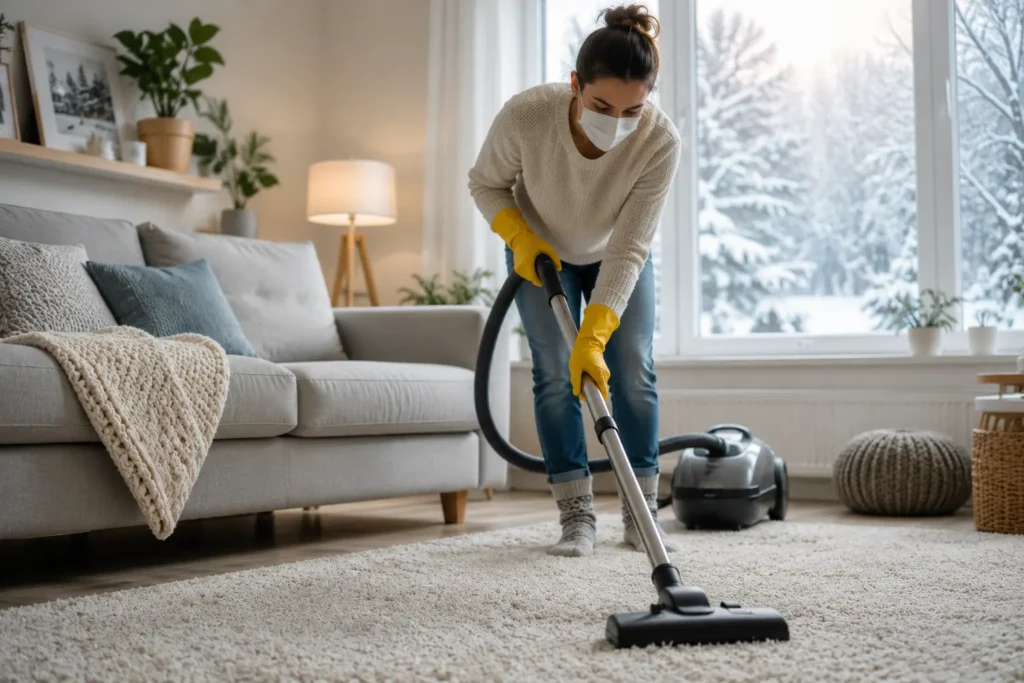
Sometimes allergy symptoms appear only indoors.
Watch for these signs:
- Symptoms improve outside
- Morning sneezing is frequent
- Congestion worsens overnight
- Bedrooms feel stuffy
- Symptoms return after vacuuming
These trends may sound familiar, and indoor allergen control may be more effective than seasonal medication alone. An effective approach is to combine environmental modifications with appropriate dust mite allergy treatment.
Simple measures to reduce allergy
No need for a drastic house remodelling to get rid of winter allergies. The changes you make in your habits- even very small ones- usually add up to a visible difference, though.
- Improve Carpet Care
Make sure to use a high-performance filtration vacuum cleaner to do regular carpet vacuuming.
- Bedding washing weekly
Warm water helps to get rid of dust and allergen particles.
- Lower indoor humidity
Dryness and ventilation should be maintained in the rooms.
- Soft furnishings cleaning
Use rugs, curtains and cushions.
- Declutter Bedrooms
Less surface area, less dust!
These practical steps help maintain dust mite allergy treatment by minimising exposure.
Treatment And Prevention Options
Management of allergy is often reduction of the allergens and modifications to routine living.
Winter Allergy Action Checklist
| Action | Benefit |
| Vacuum regularly | Reduces carpet allergens |
| Wash bedding weekly | Removes dust mites |
| Air rooms daily | Improves airflow |
| Use allergy-friendly covers | Limits exposure |
| Clean upholstery | Reduces trapped particles |
| Maintain heating systems | Improves air quality |
Additional options may include:
- Saline nasal rinses
- Medical advice for persistent symptoms
- Allergy testing
- Recommended medications
- Professional carpet cleaning when required
The dust mite allergy treatment will, as a rule, be symptom management, allergen avoidance and in some cases, medication.
Build A Healthier Winter Home
Winter allergies aren’t just related to cold weather. For many Aussies, the real problem is being indoors more, with hidden allergens. Carpet, bedding, furniture and poor ventilation provide conditions for dust mites to multiply. What is winter allergies carpet dust mites, and the relationship between them helps you to know why ticks are more aggressive in winter. The good news is that small changes—vacuuming your carpets more, opening windows to let the air circulate, dusting less and keeping soft furnishings can make a positive impact. Recognising the signs your carpet needs professional cleaning immediately can also help reduce winter allergens and dust mite buildup indoors. Winter should feel cosy indoors, not itchy in there.” So cleaning now can make for a dustbusting, healthier home this winter!
Related Posts

8 Ways to Keep Your Carpet in Good Condition and Its Life
8 Ways to Keep Your Carpet in Good Condition and Its Life Have you ever…
The Best Steam Cleaning Tips and Tricks for First Timers
Have you looked at your carpets, tiles or sofa and said to yourself, “How do…

What Are Mould and Its Effects on Homes and Health?
Understanding Mould Effects on Homes Do you see the strange blackish discolouration on the walls?…